
Probate Runs Through Greene County Chancery Court
Greene County probate records are Chancery Court records. The county has no separate probate court. Instead, the Chancery Court holds the cases that other states route to a probate or surrogate's bench. Greene County sits in the 16th Chancery District, and three chancellors hear its equity docket: Hon. Mark Maples, Hon. Ashley Cole, and Hon. D. Neil Harris.
The court's reach is wide. It handles estates of decedents, guardianships, conservatorships, wills and trusts, minor settlements, and insurance settlements paid to minors. It also confirms property title, resolves land disputes, and orders the commitment of mentally disabled persons. Divorce, child custody, and adoption sit on the same docket, which is why one chancery file may touch family, property, and probate questions at once.
The Chancery Clerk, Michelle "Shelley" D. Eubanks, keeps these files. As Clerk of the Chancery Court she records estate petitions, guardianship accountings, and final decrees, and she also serves as the county's public recorder for deeds, mortgages, and liens. That dual role connects an estate to the land records the heirs may later need.
Probate Terms Defined
Probate filings use words that rarely come up in daily life. A short glossary helps a first-time reader follow an estate file in Greene County Chancery Court without guessing at the meaning of each heading.
- Testator
- The person who made the will. A testator names who should inherit and who should manage the estate after death.
- Executor
- The person named in the will to carry it out. The court confirms the role and issues letters testamentary so the executor can act.
- Intestate
- Dying without a valid will. When this happens, state law decides who inherits, and the court appoints an administrator instead of an executor.
- Guardianship
- A court arrangement that lets one person make decisions for a minor or an incapacitated adult, often over both care and property.
- Conservatorship
- A court order placing the financial affairs or estate of a person who cannot manage them under the control of an appointed conservator.
How to Search Greene County Probate Records
Greene County does not publish a single online portal for chancery case files. There is no county-hosted search for probate, guardianship, or conservatorship records the way some counties post estate dockets. The reliable path starts with the office that holds the file. Older and non-digitized estate records come from the Chancery Clerk counter or a mail request.
Several channels exist, and the right one depends on the file. The Chancery Court is the legal venue for the matter, the Chancery Clerk is the records office for copies, and MEC/PAMEC may carry some chancery cases for registered viewers. The land-record portal helps with deeds and liens tied to an estate, but it is not a substitute for the case file itself.
- Confirm the matter is a chancery probate file, such as a decedent's estate, a guardianship, or a conservatorship, rather than a circuit or justice-court matter.
- Contact the Greene County Chancery Clerk at 601-394-2377, or write to P.O. Box 610, Leakesville, MS 39451, with the names and approximate dates.
- Ask whether the file is available at the counter, by mail, or through MEC/PAMEC, and ask what a certified copy will cost before ordering.
The Chancery Clerk profiles the office and its duties on the county Greene County Chancery Clerk page.
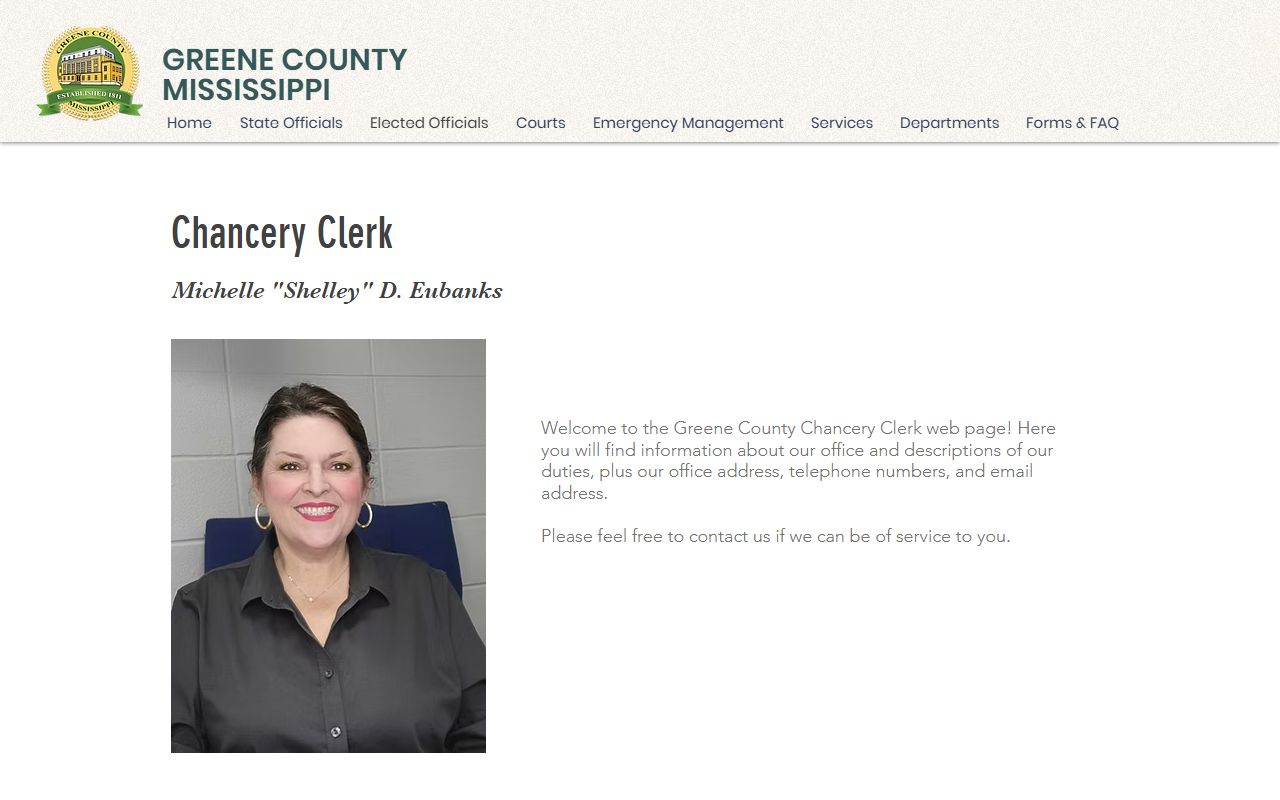
That page lists the clerk's records, recording, and Chancery Court duties, which is why estate questions and certified copies start there rather than with the Circuit Clerk.
Greene County Chancery Court and Clerk Offices
The Chancery Court and the Chancery Clerk both work from the Greene County Courthouse at 400 Main Street in Leakesville. The court is the venue where chancellors hear estate and guardianship petitions; the clerk's office is the counter where the public asks for files and certified copies. Both keep the same weekday hours.
Greene County Chancery Court
400 Main Street, P.O. Box 610
Leakesville, MS 39451
601-394-2377
Fax 601-394-4445
16th Chancery District
Hon. Mark Maples; Hon. Ashley Cole; Hon. D. Neil Harris
Greene County Chancery Clerk
Michelle "Shelley" D. Eubanks
400 Main Street, P.O. Box 610
Leakesville, MS 39451
601-394-2377
Fax 601-394-4445
Mon-Fri 8 a.m. to 5 p.m.
The courthouse sits within the county's mapping and tax footprint, shown on the Greene County mapping and tax information page.
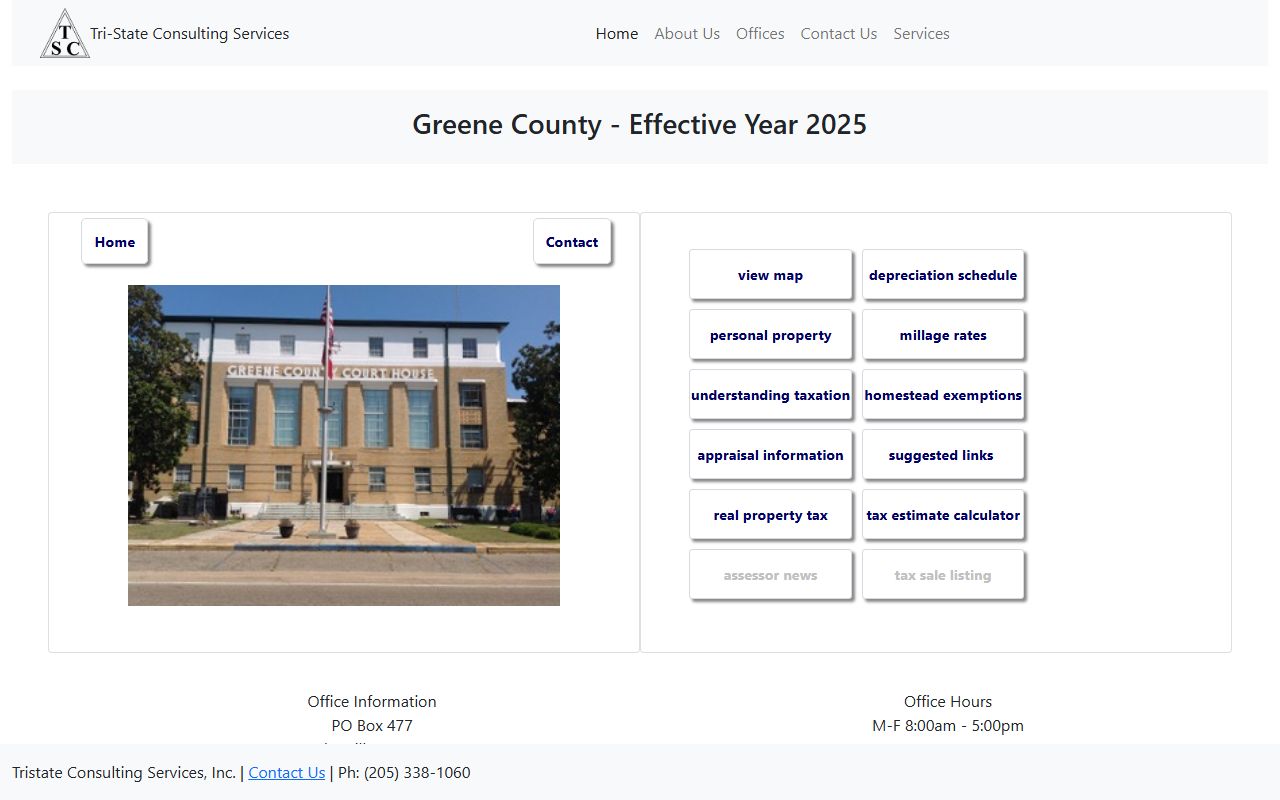
Estate matters often turn on real property, so the parcel, ownership, and tax detail behind that map can matter once an estate moves toward a sale or distribution of land.
Note: Certified divorce or estate copies come from the Chancery Clerk where the case was decided, not from the state health department or the Circuit Clerk.
Probate and Estate Filing Fees
No Greene County Chancery Court probate fee schedule was located in official online sources. That gap matters, because filing fees for opening an estate, issuing letters, or starting a guardianship are not published where the public can confirm them in advance. The honest answer is to call the Chancery Clerk at 601-394-2377 and ask for the current cost before filing or ordering copies.
The county does publish one related fee set. The Chancery Records land portal lists the charges that apply when someone buys an online copy of a deed, mortgage, or lien tied to an estate. Those fees are confirmed; the probate filing fees are not.
| Item | Amount |
|---|---|
| Online land-record copy service fee | 3.5% of the charge |
| Minimum service fee per online purchase | $2.00 |
| Original probate or estate filing | Fee not published in official sources; call 601-394-2377 |
| Letters testamentary or of administration | Fee not published in official sources; call 601-394-2377 |
| Guardianship or conservatorship petition | Fee not published in official sources; call 601-394-2377 |
| Certified copy of a chancery file | Fee not published in official sources; call 601-394-2377 |
Online copy purchases through the land portal are final once the card is charged, so verify the document and the parcel before buying. The portal also warns that its online index is not the official index, and that the courthouse index controls.
What Greene County Probate Records Show
An estate file builds up in layers as the case moves. Each filing answers a question: who died, who speaks for the estate, what the estate owns, who is owed money, and how the property is finally split. A reader who knows the order of those filings can find the one document they actually need.
A typical Greene County chancery probate or estate file may contain the following records.
- Petition to open the estate and proof of the will, codicil, or heirship.
- Letters testamentary or letters of administration appointing the fiduciary.
- Notices to creditors and heirs, with proof of publication.
- Inventory and appraisement of the estate's property.
- Claims filed against the estate by creditors.
- Orders approving a sale or distribution of assets.
- Final accounting and the order closing the estate.
Guardianship and conservatorship files follow a similar arc, with petitions, appointment orders, and periodic accountings. Minor-settlement and insurance-settlement files show how money owed to a child is held and approved. Routine estates close after the final accounting, while contested matters can stay open far longer.
Steps in a Greene County Probate Case
Probate follows a set path from the first petition to the closing order. Each step leaves a record in the Chancery Clerk's file, which is why the docket reads almost like a timeline of the estate.
- A family member, attorney, or interested party identifies the need to open an estate, guardianship, conservatorship, or related chancery matter.
- The petition is filed with the Greene County Chancery Clerk for the Chancery Court.
- The court reviews venue, the interested parties, the will or heirship, and any required notices.
- The Chancery Court enters orders appointing a fiduciary or otherwise resolving the matter.
- The fiduciary files an inventory, accountings, creditor notices, or requests for authority to sell or distribute property.
- A final accounting or closing order completes routine estates, while contested estates can take longer.
- Certified copies come from the Chancery Clerk, not the state health department or the Circuit Clerk.
Because divorce and adoption sit on the same docket, the Chancery Clerk's office is also the place to request a certified divorce decree once a family case is decided.
Land Records Connected to Greene County Estates
Estates and land records overlap in Greene County because the same office keeps both. When an estate includes a house, acreage, or mineral interest, the heirs often need the deed, mortgage, or lien history alongside the probate file. The Chancery Clerk's land portal indexes those documents.
The official Chancery Records portal at records.greenecountyms.gov offers online access to the index of Greene County land records. It has paths for Official Land Records and a Historic Virtual Index. The portal repeats an important caution: the online index is not the official index, and the courthouse index is the one that controls. Treat it as a research tool that points to the certified record, not a replacement for it.
For a title confirmation, a property dispute, or a sale ordered inside an estate, the deed history and the probate file work together. A buyer or heir should match the chancery order to the recorded deed before relying on either one alone.
Estates, Debts, and Federal Bankruptcy Records
Some estates run into debt questions that reach beyond the Chancery Court. When a person files bankruptcy, or when an estate is insolvent, the federal record lives in a separate system. Greene County falls under the U.S. Bankruptcy Court for the Southern District of Mississippi, with courthouse locations that include Gulfport.
The federal bankruptcy court keeps its own dockets, separate from any chancery probate file. Its public site explains how cases are filed and accessed through the federal PACER system rather than the county courthouse.
The court's main page sits at the Southern District of Mississippi Bankruptcy Court site.
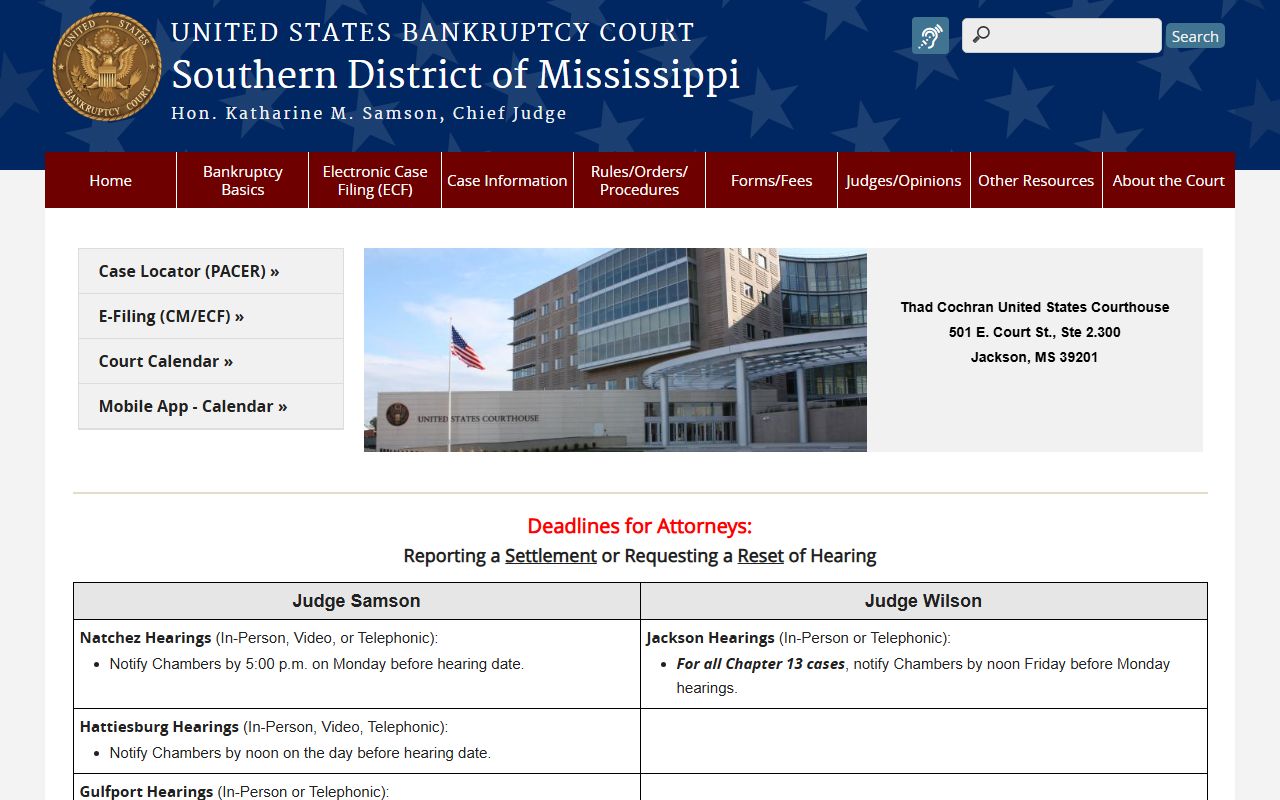
That site is the right starting point when an estate's debts, or a decedent's earlier filing, turn out to be federal bankruptcy matters rather than chancery ones.
Cost is a common question, and the federal court publishes its charges plainly. The bankruptcy fee schedule lists record search and reproduction fees that differ from anything the county charges.
Those amounts appear on the court's bankruptcy filing fees page.
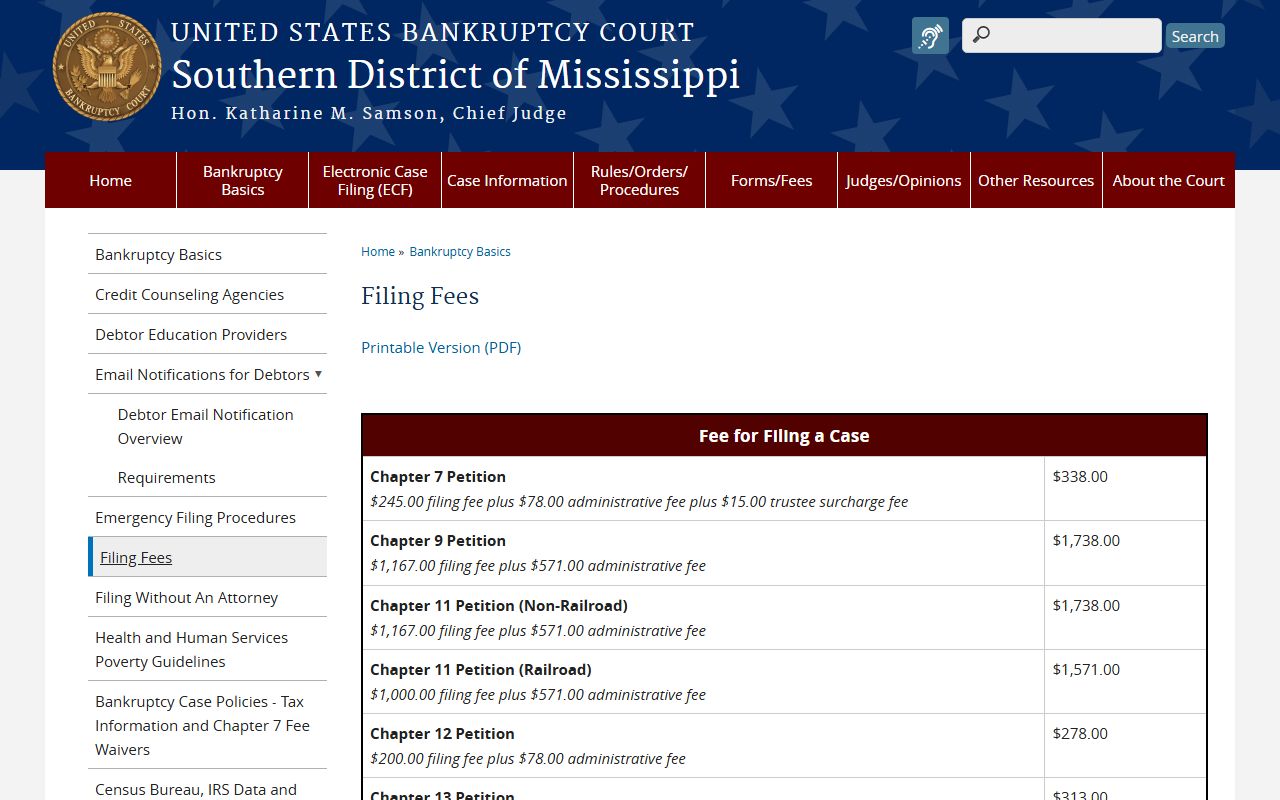
Reviewing those fees first helps an executor or heir budget for a federal record search instead of assuming the county copy cost applies.
Knowing where to walk in or write also helps, since the federal clerk's office is not the Leakesville courthouse. The bankruptcy court lists each of its clerk's office locations and contact details.
Those addresses and phone lines are posted on the court's bankruptcy clerk locations page.
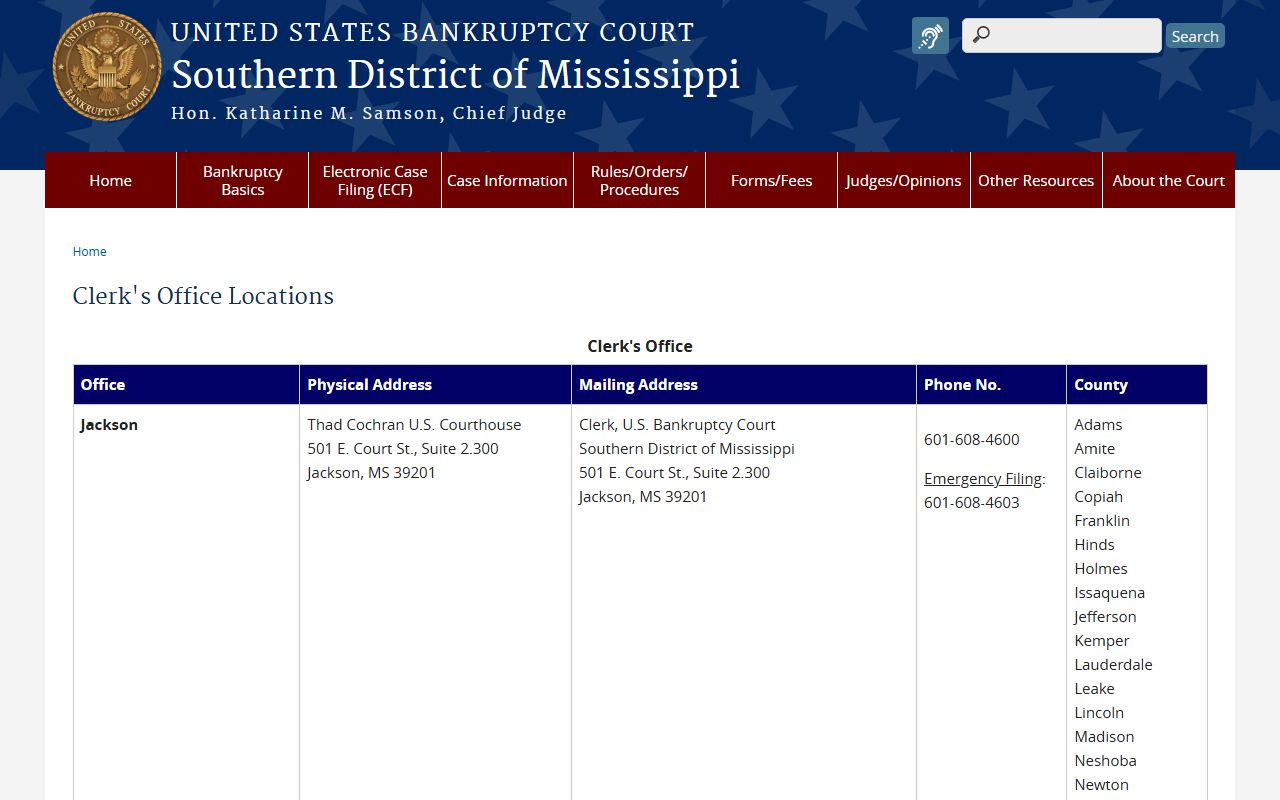
For a routine Greene County estate with no bankruptcy, none of this applies, and the Chancery Clerk in Leakesville remains the single office to contact.
Restricted Greene County Probate Records
Not every probate file is fully open. Many estate records are public, but guardianship, conservatorship, minor-settlement, adoption-linked, and mental-health records can hold confidential or sealed material. The court can seal a file or redact part of it while still releasing the rest.
Mississippi's Public Records Act favors inspection, yet it also requires the removal of exempt material before a record goes out. Adoption records handled in Chancery Court are confidential under state law, and access usually requires party status, legal authority, or a court order. Commitments of mentally disabled persons carry medical-privacy protections, so ordinary chancery access does not open a mental-health commitment file.
The safe approach is to ask the Chancery Clerk what is releasable in a given file rather than assuming the whole record is public. The clerk can explain which parts are open, which are sealed, and what a requester must show to see a restricted estate or guardianship record.